
Buffalo Grove Directory Runs
No continuous Buffalo Grove city directory run was found in the official sources reviewed. The verified core is a group of regional Chicago Suburban North White Pages held digitally by the Library of Congress. Their locality indexes include Buffalo Grove. Library and archive sources then supply newspaper, court, probate, naturalization, tax, and family-history evidence for missing years.
| Collection | Years found | Where held | Access |
|---|---|---|---|
| Chicago Suburban North White Pages | 1960/61, 1961/62, 1962/63, 1964/65 | Library of Congress | Free digitized scans |
| Related regional telephone metadata | 1966 through 1968 listed | Library of Congress catalog | Confirm each volume online |
| Wheeling Independent material | Select material, including a 1961 example | Indian Trails Public Library | Digital material and appointment |
| Raupp Museum collections | 1895 receipt and 1916 to 1919 receipt run | Raupp Museum and CatalogIt | Online descriptions; research contact |
| Lake and Cook county archives | Varies by record group | IRAD, Cook archives, research centers | Repository or remote request |
The table is a coverage map, not a claim that every Buffalo Grove resident appears. Telephone books list subscribers. Museum objects preserve selected people and events. Archive groups follow county dates and jurisdictions. Always record the source type beside the name.
Buffalo Grove City Directory Years
The Library of Congress 1962/63 volume provides the clearest verified digital example. Its metadata identifies Chicago Suburban North White Pages, and the locality index includes Buffalo Grove among several communities. Neighboring places share the book, so use the locality marker rather than assuming every scan concerns the village.
Search surname variants and initials. Then save the title page, edition year, abbreviation page, locality heading, and listing page. A phone-book year may span two calendar years, which is why “1962/63” should remain intact. Related records identify 1960/61, 1961/62, and 1964/65 volumes, while later metadata mentions 1966 through 1968. Verify a later scan before citing a specific entry.
A person missing from one Buffalo Grove city directory may have lacked a listed telephone, used another household subscriber’s name, appeared under a nearby postal community, or moved between publication and use. Absence is not proof of absence from the village.
Read Buffalo Grove Directory Entries
A historical listing must be read within its own printed key. The verified Buffalo Grove collection is telephone-directory material, so do not assume it carries the occupation, spouse, or ownership marks found in some commercial city directories. Capture only fields the scanned entry actually displays.
| Printed name | Exact surname, given name or initials, including spelling and punctuation |
|---|---|
| Locality heading | The community section under which the publisher placed the entry |
| Street line | House number and street as printed in that edition |
| Telephone | The exchange and number shown for the listed subscriber |
| Edition | Publisher title and year span needed to date the clue |
Photograph or save the abbreviation and locality pages along with the listing. This keeps a short mark from being misread later.
- Criss-cross directory
- A directory ordered by street and house number. No continuous local run was verified.
- Householder index
- An index centered on the person listed for an address, not a census of all residents.
- Abbreviation key
- The publisher’s own explanation of shortened words and marks in that edition.
- Locality index
- The part that identifies which communities appear within a regional volume.
Wheeling Sources for Buffalo Grove
Indian Trails Public Library’s genealogy guide points to selected digitized Wheeling Independent material, including a January 5, 1961 sample issue, and offers research appointments. The newspaper title does not limit every story to Wheeling. Buffalo Grove-area families, shops, schools, clubs, deaths, marriages, and civic events can appear in a nearby-community paper.
Search by person, street, organization, and adjacent community, not only “Buffalo Grove.” Compare any newspaper address with the same-year telephone volume. An event notice can expand an abbreviated directory name, while a directory line can distinguish two people with similar names.
Indian Trails also identifies genealogy resources such as America’s GenealogyBank, Ancestry, Chicago Tribune Historical, and HeritageQuest. Access can depend on a library card, building visit, or database license. Staff can explain access and arrange research help, but no source reviewed promised a complete directory lookup by staff.
Raupp Museum Name Trails
The Raupp Museum online collections provide object records, photographs, receipts, and local-history descriptions through CatalogIt. Search a surname, business, road, organization, or event. Then record the item title, date, caption, donor or provenance, and collection identifier. Provenance means the documented history of where an item came from.
The Weidner’s General Store receipts make the collection unusually concrete. The public receipts page identifies one dated June 17, 1895 and a run from 1916 through 1919. Those papers can preserve names, handwriting, goods, dates, and business ties from well before incorporation. They are artifacts, not a complete customer ledger or Buffalo Grove city directory.
A museum item can connect a family to a place or activity even when there is no printed book for the year. Ask the museum about supervised research when the public description does not show enough context.
Buffalo Grove Before Incorporation
Buffalo Grove incorporated in 1958 with a snapshot of 164 people and 58 acres. That small beginning is a key reason the historical shelf looks different from that of a large old city. Pre-incorporation families may appear in county deeds, township records, farm or store papers, church and cemetery sources, newspapers, probate, or naturalization files rather than in a Buffalo Grove-labeled book.
| Period | Useful source shift |
|---|---|
| Before 1958 | County, township, land, church, newspaper, and museum records carry much of the trail |
| 1958 incorporation | Village administrative records begin to grow beside older county systems |
| Early 1960s | Verified regional White Pages give a selective subscriber window |
| Mature suburban era | Permits, plats, zoning files, parcel cards, organizations, and newspapers add address evidence |
| Digital era | Modern indexes improve current access, while older books still require archives and libraries |
The village spans Lake and Cook Counties. Pick the county before requesting deeds, probate files, court cases, or vital indexes. A modern Buffalo Grove postal address cannot settle which historical county record group applies.
Archive Gaps in Buffalo Grove
The Illinois Regional Archives Depository for Lake County lists county history and record groups held through Northern Illinois University. Lake material includes old circuit case files, naturalization, minutes, birth indexes and books, tax or collector material, and other county records by stated date range. Cook records have separate IRAD and county archive routes.
The Cook County Historic Archives and Records Office handles archival inquiries and remote reference for Cook holdings. These are request-driven sources, not one searchable Buffalo Grove city directory. Provide a person, approximate date, record type, township or county, and any known address. A narrow request is more likely to reach the right series.
The Lake County library research centers connect users with genealogy databases, newspapers, cemetery and obituary resources, and library locations.
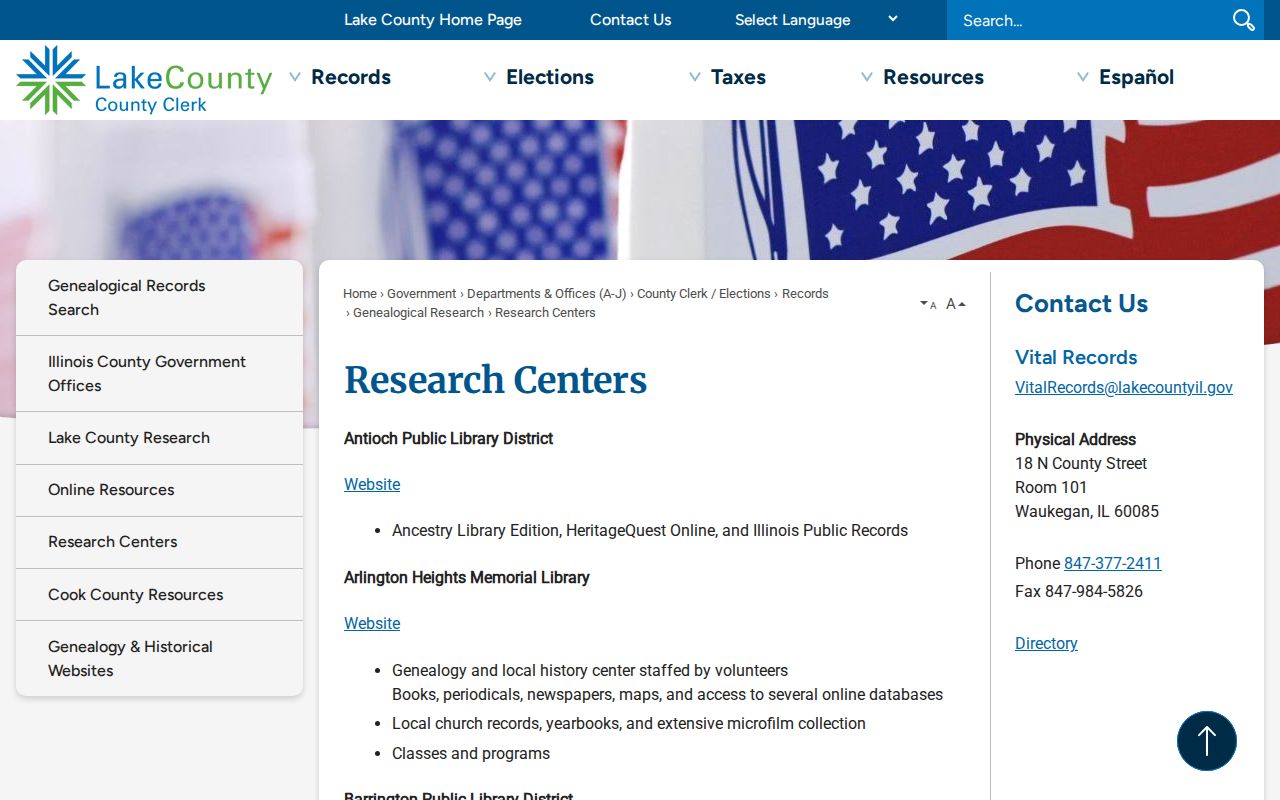
The captured page shows the official research-center route that can fill a missing directory year.
Cook Archives for Buffalo Grove
Cook-side Buffalo Grove families can require a separate archive trail. Recorder functions moved to the Cook County Clerk in 2020. Historic recording holdings reach back to 1871, while the current online database is described from 1985 forward. Older deeds, court groups, probate, naturalization, coroner, and administrative material may be held by different custodians.
Begin with the Cook County archives page shown below, then frame the request around a dated person, parcel, case, or event.
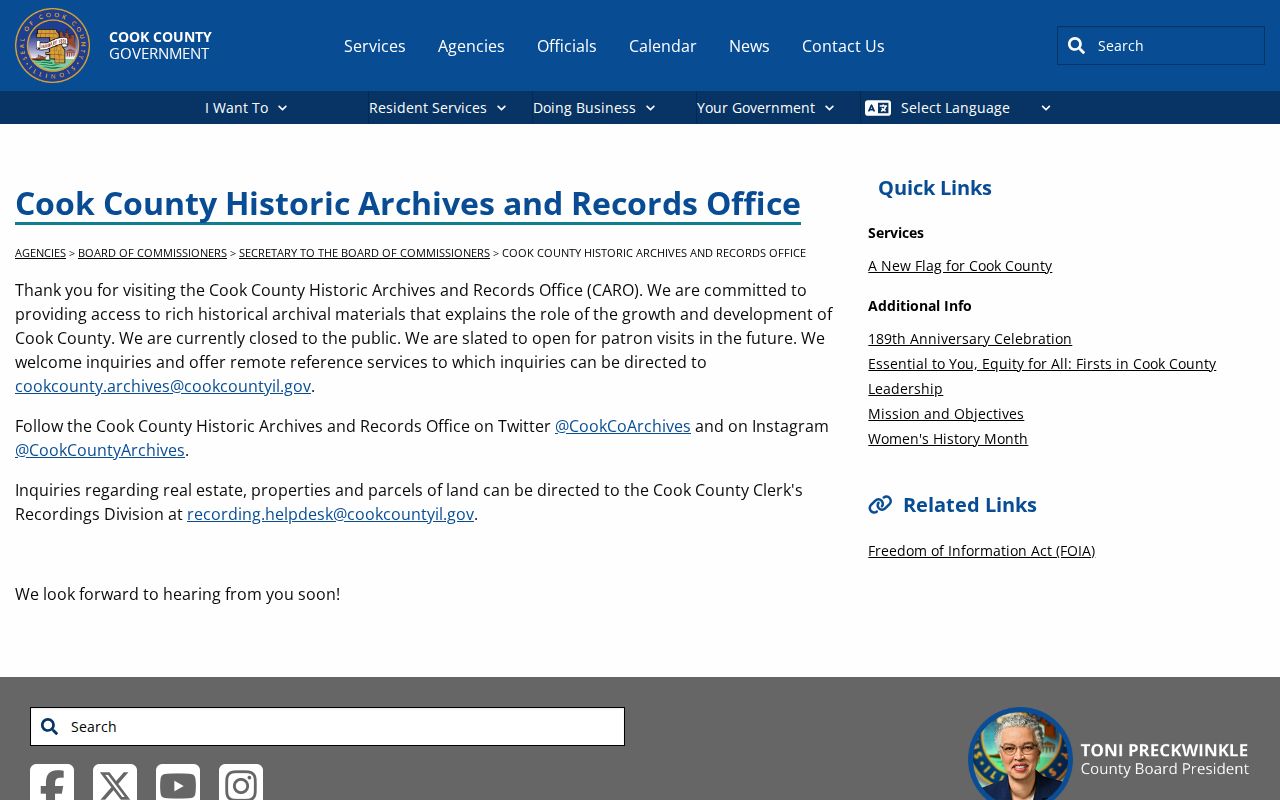
This archive channel matters when a regional phone book provides a name but not enough evidence to identify the correct family.
Note: A Cook or Lake archive record should be cited by its original county and date, even when the later address is Buffalo Grove.
Trace Buffalo Grove Family History
A city directory result becomes much stronger when it is followed across time and compared with a second kind of record. Keep a research log. Separate facts printed in the book from later conclusions.
- Find the earliest verified name in a locality-indexed volume. Save the edition and page.
- Search the next available volume with initials, spelling variants, and the prior telephone number.
- Compare the street line with parcel or deed records when an ownership question matters.
- Pair the 1960s entries with the 1950 federal census, then use newspapers between those dates.
- Use obituary, probate, cemetery, museum, or archive records to explain a disappearance or family change.
A federal census can show a household, age, birthplace, and other facts for its census date. A telephone directory usually shows the subscriber and listing. Do not merge those source types. If the target shifts to modern address-keyed records, the Buffalo Grove street directory supplies the parcel and deed workflow.
Buffalo Grove Directory Evidence Limits
A directory entry supports a name, listing, address, phone, locality, and edition only to the extent those fields appear. It does not establish all household members, ownership, an exact move date, or continuous residence. A museum receipt records an item and transaction context. A newspaper reports an event. Each is useful because it is dated, not because it is complete.
No dedicated Buffalo Grove obituary index, continuous directory run, or full historical neighborhood database was located. Lead with that fallback chain: check the available phone volume, ask Indian Trails or Vernon Area about databases and appointments, search Raupp Museum descriptions, contact a county research center, then request the correct IRAD or Cook archive series. Never invent a missing publisher or year.
Best proof. Match a directory listing with one independent source from the same period, and preserve the exact date and county with both.